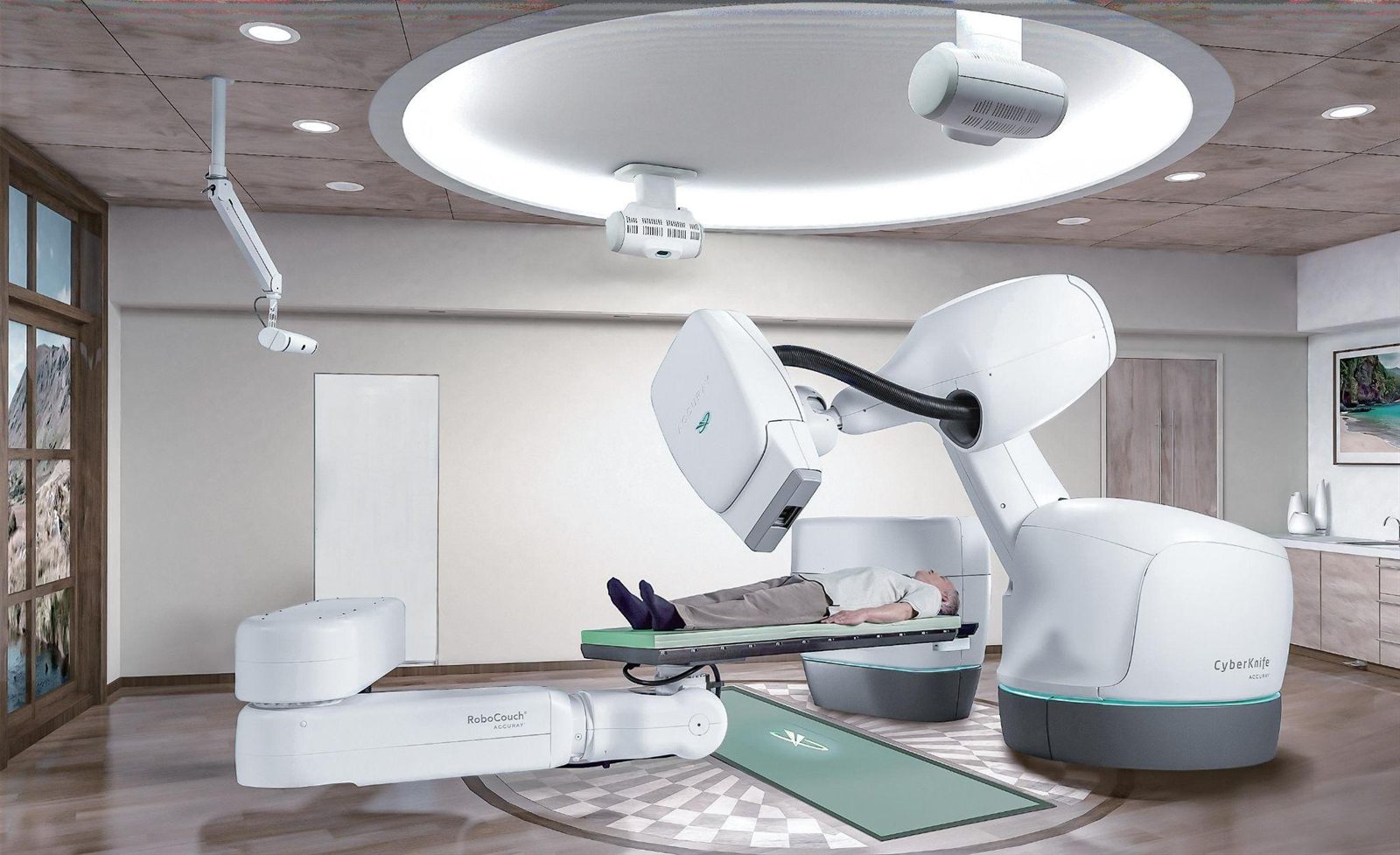
Sometimes, a tumour or lesion is located in a delicate area — such as near the spinal cord or close to crucial blood vessels — where traditional surgery might carry high risks. In other cases, surgery or repeat radiation may not be recommended. For years, these situations presented difficult challenges for doctors and families alike.
Robotic radiosurgery, commonly known by the brand name CyberKnife, was developed specifically to help in these complex cases. Despite the word "Knife" in its name, it involves no cutting, no pain, and no hospital stay. Instead, it provides a safe, highly focused treatment option tailored to your loved one's unique needs.
Here is a simple look at how CyberKnife works, how it compares to other treatments, and what you and your loved ones can expect.
What is CyberKnife and how does it work?
CyberKnife combines advanced robotics with intelligent imaging to deliver targeted beams of radiation. The system uses a flexible robotic arm that smoothly moves around the patient, aiming high-dose radiation beams at the target from hundreds of different angles with extreme accuracy.
What makes CyberKnife truly special is its continuous tracking technology. As your loved one breathes or relaxes during the session, the target area moves slightly. CyberKnife detects these minor movements in real time and automatically adjusts the beam to follow the target, protecting the surrounding healthy tissue.
Because of this exceptional precision, a complete course of treatment is far shorter than most families expect.
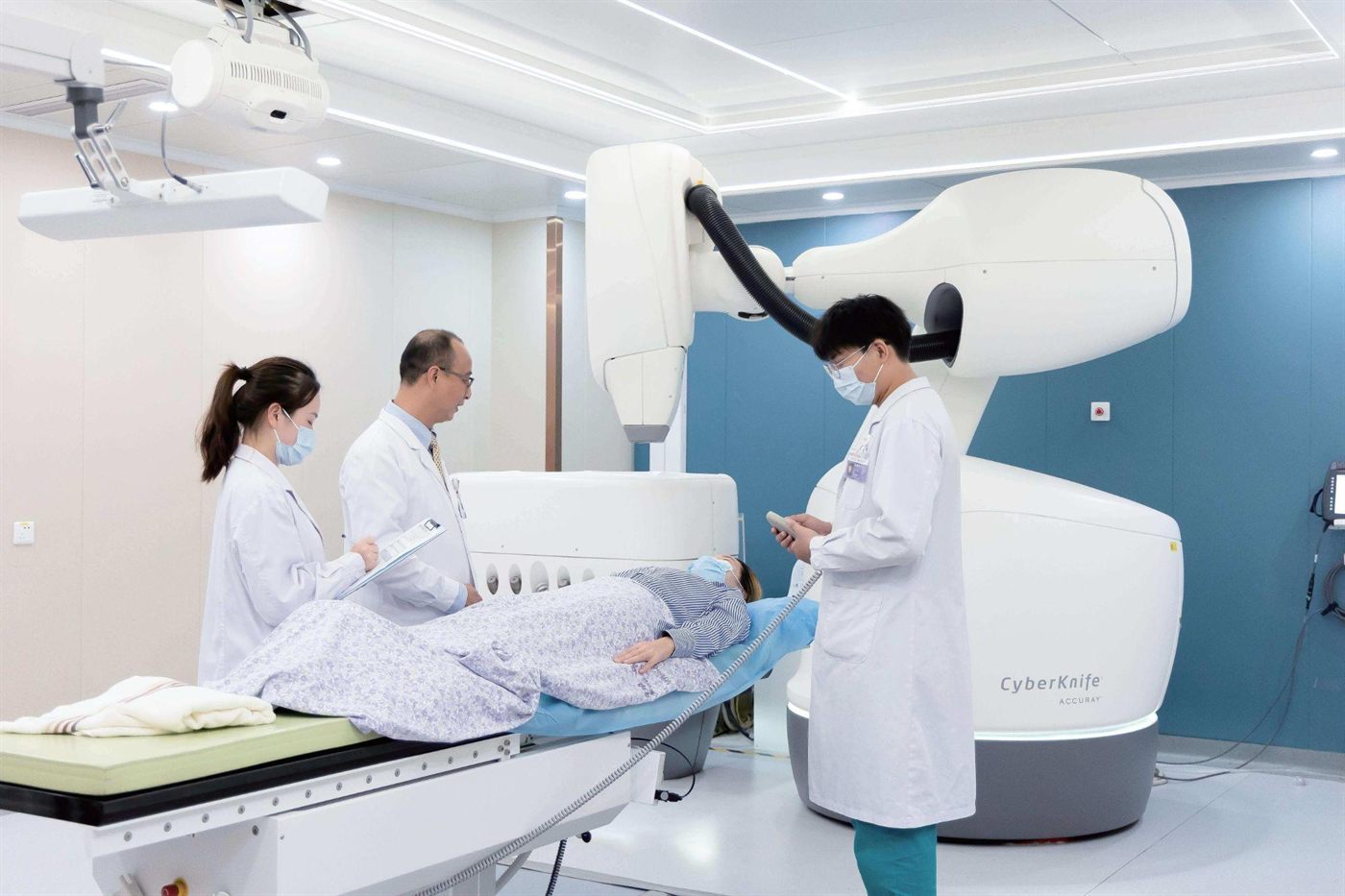
Treatments are entirely non-invasive — allowing your loved one to return home and resume their normal routine right away.
How CyberKnife compares to other treatments
Understanding how CyberKnife differs from other radiation options can help you and your family feel more confident in treatment choices. The table below highlights the key differences between standard radiotherapy, Gamma Knife, and CyberKnife across treatment duration, precision, target locations, and overall patient comfort.
| Feature | Standard Radiotherapy (IMRT) | CyberKnife | Gamma Knife |
|---|---|---|---|
| Number of sessions | 20 to 40 sessions over several weeks | 1 to 5 short sessions | Usually 1 single session |
| Precision & motion tracking | Standard precision; relies on initial setup positioning | Extreme precision; real-time robotic motion tracking without rigid frames | High precision; relies on a rigid head frame pinned to the skull |
| Target areas | Various areas across the body | Full body (brain, spine, lungs, liver, pancreas, prostate) | Brain and intracranial targets only |
| Patient comfort & immobilisation | Non-surgical; uses standard non-invasive positioning aids | Non-surgical; uses a comfortable mesh mask for brain treatments, or requires no frame for body treatments | Non-surgical; uses a rigid metal head frame pinned directly to the skull for immobilisation |
Swipe the table sideways to compare all three →
Who can benefit from CyberKnife?
CyberKnife is a valuable option for patients looking for an effective, gentle alternative to surgery or standard radiation. It may be a viable option if your loved one:
- Has a tumour or lesion located in a complex or hard-to-reach area near vital organs.
- Has already received radiation in the past and needs a safe option for further treatment.
- Is seeking a non-invasive treatment that avoids general anaesthesia, incisions, and recovery time.
- Prefers a shorter overall treatment schedule, easing the caregiving burden and allowing you both to focus on recovery and family life.
Applications beyond cancer
In addition to treating cancerous and non-cancerous tumours throughout the body, CyberKnife is used for select non-oncology conditions. For instance, it can treat brain arteriovenous malformations (AVMs) — tangles of abnormal blood vessels — and trigeminal neuralgia, a condition causing severe nerve pain in the face.
A case in point, documented by Fosun Hospital Foshan's CyberKnife team: a female patient with a brain AVM that had already bled once, leaving her with recurring dizziness. She had been through three rounds of interventional embolization, but the malformation would not fully close, and the bleeding risk remained. She was treated with CyberKnife instead — three sessions, delivered over 203 individual beam angles, according to the hospital's case record. Her dizziness resolved, and on follow-up imaging six months later, the malformation had shrunk substantially, with most of the abnormal vessels closed and no new bleeding detected.
It is worth being clear about what one case does and does not show: it is a single documented outcome, not a guarantee of how any other AVM would respond. Individual results vary based on the malformation's size, location, and the patient's own anatomy — which is exactly why AVM treatment decisions are made case-by-case with a neurosurgical or radiosurgery team, not on the basis of any one example.
Key takeaways for you and your family
- Non-invasive and painless: CyberKnife delivers targeted treatment with no incisions, no surgery, and no hospital stay required.
- Real-time precision: Robotic motion tracking protects healthy tissue around the target while treating delicate or previously treated areas.
- Convenient schedule: Treatment is completed in just 1 to 5 short sessions, helping your loved one return to everyday life faster.
- Personalised care: The radiation oncology team will work directly with you and your family to determine if CyberKnife is the safest and most effective option for your loved one.
Next step
If you are exploring options for a loved one with a hard-to-reach tumour, or seeking an alternative to conventional surgery, speak with a radiation oncologist. Reach out to the Kinship team to schedule a consultation, request a second opinion, or learn more about how CyberKnife can support your family's care journey.
Where to get help. Book a radiation oncology consultation or a second opinion through Kinship by DA — we'll help arrange your appointment.
Urgent: If your loved one develops a sudden severe headache, weakness, or loss of consciousness, seek immediate care at an emergency department.
This guide is for informational purposes only and is not a substitute for professional medical advice, diagnosis, or treatment. Suitability for CyberKnife treatment is determined on an individual basis by a qualified oncology team. The clinical case referenced is for illustrative purposes only.