
If you've never heard of Pseudomyxoma Peritonei (PMP), you're not alone — most people, including many doctors outside oncology, will go their whole careers without seeing a case. It's one of those cancers that tends to be discovered almost by accident: during a scan for something else, or during surgery for what looked like a straightforward case of appendicitis.
Because it's so rare and its early symptoms are so vague — a bit of bloating, mild abdominal discomfort, feeling full quickly — PMP is easy to dismiss or misattribute to something far more common. Understanding what it is and how it behaves can help you ask the right questions if it's ever raised as a possibility for you or someone you love.
What is Pseudomyxoma Peritonei?
Pseudomyxoma Peritonei is a rare complication that most commonly arises from a type of appendix tumour. According to Cancer Research UK, it's considered a very uncommon condition.
It usually begins as a small growth (a polyp) in the appendix. Importantly, this isn't the same type of polyp that typically leads to colon cancer — it behaves differently, and so does the disease it can cause.
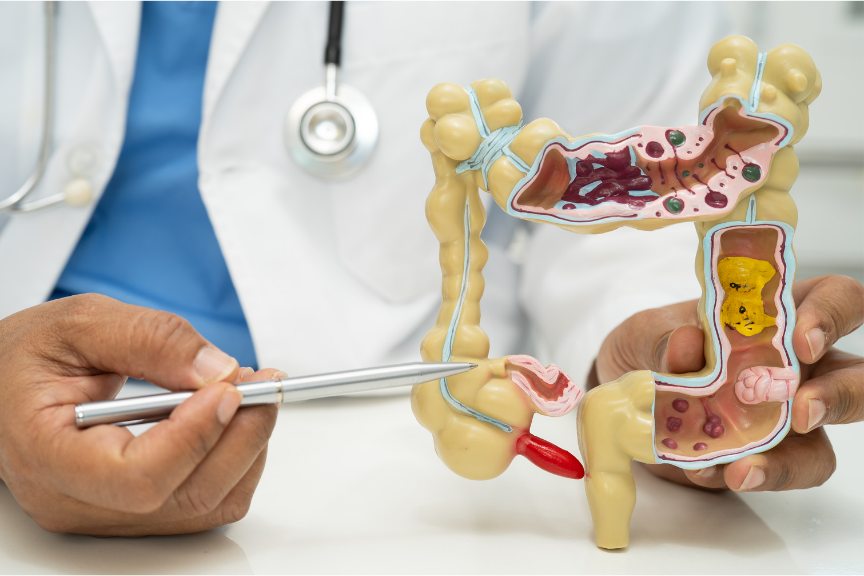
In PMP, the tumour cells produce a jelly-like mucus. Over time, this mucus can build up in the peritoneal cavity — the space in your abdomen that houses the intestines, liver, and stomach — and gradually spread across nearby organs and surfaces. This slow, sticky spread is what gives the condition its nickname among some clinicians: "jelly belly."
While the appendix is by far the most common starting point, in rarer cases PMP-like mucus-producing tumours can arise from the ovaries or, very occasionally, the urinary tract.
Why it's often caught late
PMP tends to progress slowly, which sounds like it should make it easier to catch — but the trade-off is that early symptoms are so mild and nonspecific that they rarely raise alarm. Gradual bloating, a growing waistline, digestive changes, or vague abdominal fullness are all things people (and sometimes doctors) reasonably attribute to weight gain, diet, or ordinary digestive issues first.
That's part of why many cases are only found incidentally, often during imaging or surgery done for another reason entirely.
How treatment decisions are made
There isn't a single "correct" treatment for PMP — the right approach depends heavily on the individual: how much mucus and tumour tissue has spread, which organs are involved, the person's age and overall fitness for surgery, and their own preferences after discussing the options with a specialist team.
Cytoreductive surgery, often combined with heated chemotherapy delivered directly into the abdomen (HIPEC), is the established standard of care for PMP in patients who are fit for it. This approach aims to physically remove as much of the mucus and tumour tissue as possible, followed by chemotherapy applied locally to target any remaining cancer cells. It's a major, specialised operation, typically only performed at centres with specific expertise in treating PMP.
Some centres also offer other, non-surgical approaches. These are real, recognised techniques in oncology, and for the right patient in the right circumstances, they can be a reasonable part of a treatment plan. But it's worth being clear-eyed about them: they're generally considered when surgery isn't a good option, not as an equivalent substitute for it, and how well they work varies a great deal from case to case. If one of these is proposed to you or a family member, it's fair — and sensible — to ask directly how it compares to standard surgical treatment for your specific situation, what evidence supports it for your type and stage of disease, and what a second opinion from a specialist centre would say.
What this means for you
- PMP is rare, slow-growing, and usually starts in the appendix — but early symptoms are easy to mistake for something ordinary.
- Persistent bloating, abdominal swelling, or unexplained digestive changes that don't resolve are worth raising with a doctor, even if they seem minor.
- Cytoreductive surgery with HIPEC is the recognised standard treatment for eligible patients; other techniques exist for those who aren't surgical candidates, but they serve a different role rather than a like-for-like replacement.
- Because PMP is so uncommon, getting an opinion from a specialist or centre experienced in treating it — and a second opinion if a major treatment decision is on the table — is a reasonable and encouraged step, not an overreaction.
Next step
Have a symptom you can't quite explain, or a diagnosis you want to understand better? You don't have to sit with the uncertainty alone. Chat with the Kinship team to talk through what you're experiencing and get clarity on what your next step should be.
Where to get help. Book an oncology consultation through Kinship by DA — we'll help arrange your appointment.
Urgent: If you experience severe abdominal pain, are unable to pass stool or gas, or feel seriously unwell, seek immediate care at an emergency department.
This article is for general education only and is not a substitute for medical advice, diagnosis, or treatment. Treatment decisions should be made with a specialist team familiar with your case.
Content developed in partnership with Modern Cancer Hospital Guangzhou.